Breakfast Racing Team Went From Ride Club to Nationals
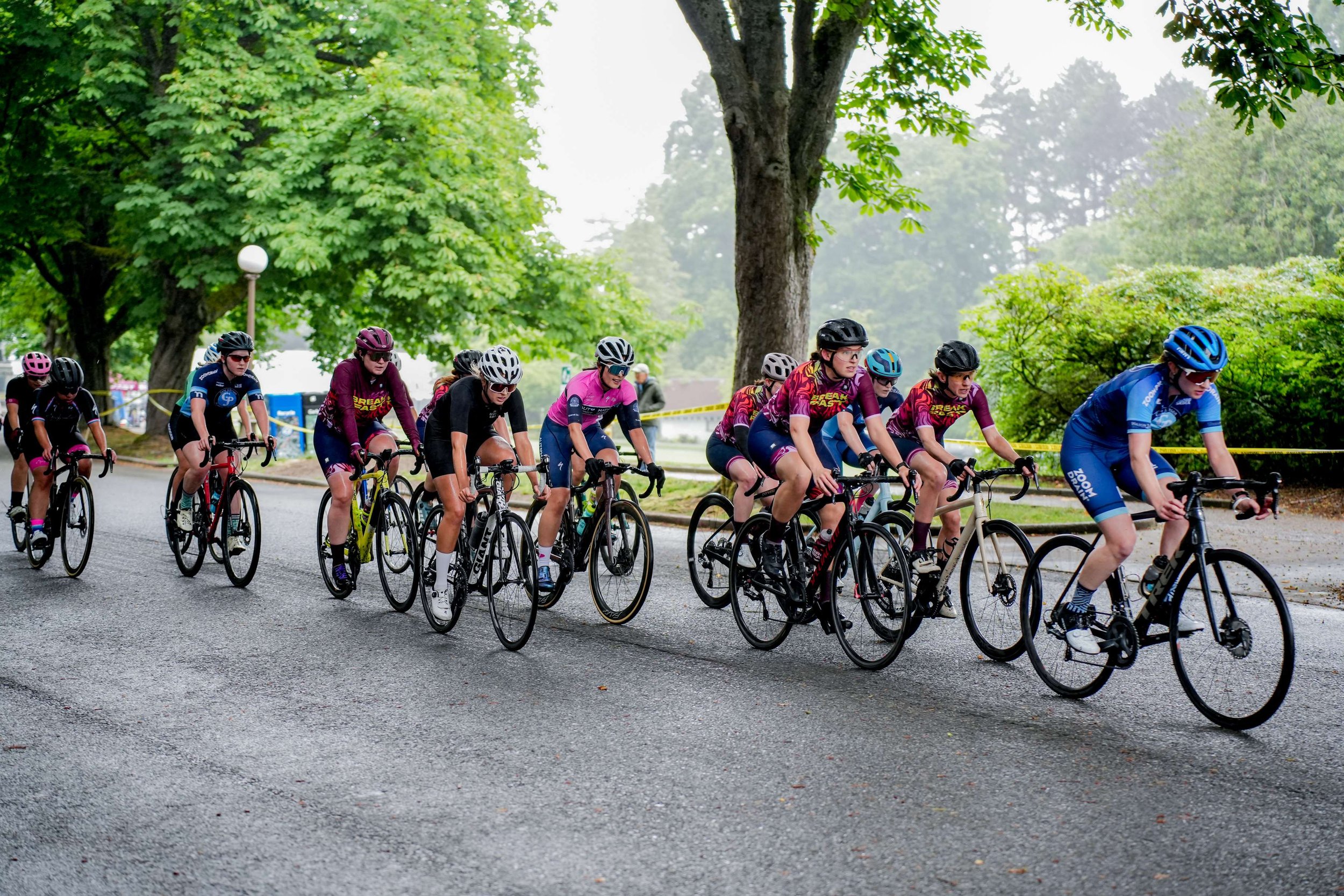
Seattle's Breakfast Racing Team grew from a 2019 ride club into a nonprofit whose racer Hen Watts won bronze at cyclocross nationals in Hartford in 2022.
Seattle Fitness Magazine · 2 Oct 2026
- 3rdwatts 2022 nonbinary nationals
- ~122021 intake road racers
- 6 wks2021 signup closed early
Breakfast Cycling Club started as a ride
Mackenna Lees met Ella Dorband through cyclocross racing in 2018.
In July 2019, the two of them launched Breakfast Cycling Club, a low barrier group ride in Seattle open to women, trans, nonbinary and genderqueer riders, whether or not they had any interest in racing at all. Dorband had already spent time as a Lead and then a board member at The Bikery, a Seattle bike nonprofit, before the two founded the club together.
The team is specific on one point. It is not a ladies team. It is built, instead, for women, trans, nonbinary and genderqueer riders regardless of presentation, a line the club still uses on its about page today.
Racing returned in 2021, then filled up fast
Organized bike racing did not resume in the Pacific Northwest until 2021.
That year is where Breakfast's own site pins the start of its racing side, even though the ride club itself dates to July 2019. Both dates sit on the same about page, never reconciled into a single founding year. When the team opened applications for new racers on September 1, 2021, it closed the signup six weeks early. Interest ran that high.
Roughly a dozen new road racers came out of that first intake alone. A Bike Works panel on race and gender equity in cycling once put the team at '49 WTFNB racers in the Seattle-ish area.' A separate count from 2024 put membership at 54. The two were never reconciled. The club was never meant for racers. It had become a pipeline into racing anyway.
Spokeswomen Racing draws a narrower line
Spokeswomen Racing, based in the same city, describes itself on its own homepage: a women's cycling team, nothing more.
No mention of trans or nonbinary riders appears anywhere in that description. Lees and Dorband's club never used the word ladies. It never needed to. Years later, the team's own about page still spells out the distinction by name, in plain language: it is not a ladies team.
For a non-binary or trans cyclist weighing which Seattle team to race for, that difference is not a tagline. It is the entire reason to choose one roster over the other.
Two pots of money, and they don't mix
Breakfast incorporated as a Washington nonprofit in 2023, filing as a 501(c)(7) under federal EIN 87-2695780, a status that means donations to the club are not tax deductible. Inside that structure sit two different pots of money that the team keeps apart. They do not mix. Team dues are optional. Riders earning more than $70,000 a year are asked, not required, to contribute 0.15 percent of their salary, the figure the team's own dues page spells out in one example: $105 on a $70,000 income.
The Racer Support Fund is a separate pool entirely, built from one-time and recurring donations in tiers from $10 to $250. It covers race entry fees for WTNB and BIPOC riders in the Puget Sound region who have signed up for an insured, competitive bike race within the next year. One fund runs the club. The other gets a rider to the start line who could not otherwise afford the entry fee.
Hen Watts reached the podium in Hartford
Henrietta Watts, who races out of Bellingham for Breakfast, lined up in December 2022 for the first non-binary category USA Cycling had ever run at its cyclocross national championships, in Hartford, Connecticut. The category was brand new. Watts finished third.
Before the trip, Watts wrote on the team's own blog, 'going to Hartford, Connecticut will be by far the furthest I've gone for one.' Watts put it simply: 'an important step in making this sport we love more inclusive both in words and in action.'
The team built its own race in Olympia
Breakfast now runs its own event too, the Boston Harbor Circuit Race, at Burfoot Park, 6927 Boston Harbor Road Northeast in Olympia.
Racers climb about 100 feet before the finish of every lap on a six-mile rolling course. The team's about page says this race started in 2024. The race's own page disagrees. Its results history begins in 2025, the next edition is marked 2027 with no date set, and nothing from 2024 appears on it anywhere.
Two pages, same club, different starting lines. What is not in dispute is simpler: a club that began as a ride for people who had never planned to race now owns a race of its own, on a course it built.