SoulCycle's Seattle Studio Runs Taylor Swift Rides and Latin Fridays Inside a Denny Triangle Tower
SoulCycle started in a borrowed Manhattan dance studio in 2006. Nineteen years later its Seattle location, on the Denny Triangle and South Lake Union border, runs the same candlelit format with a lineup of themed rides.
The Same Candlelit Ride, Nineteen Years Later
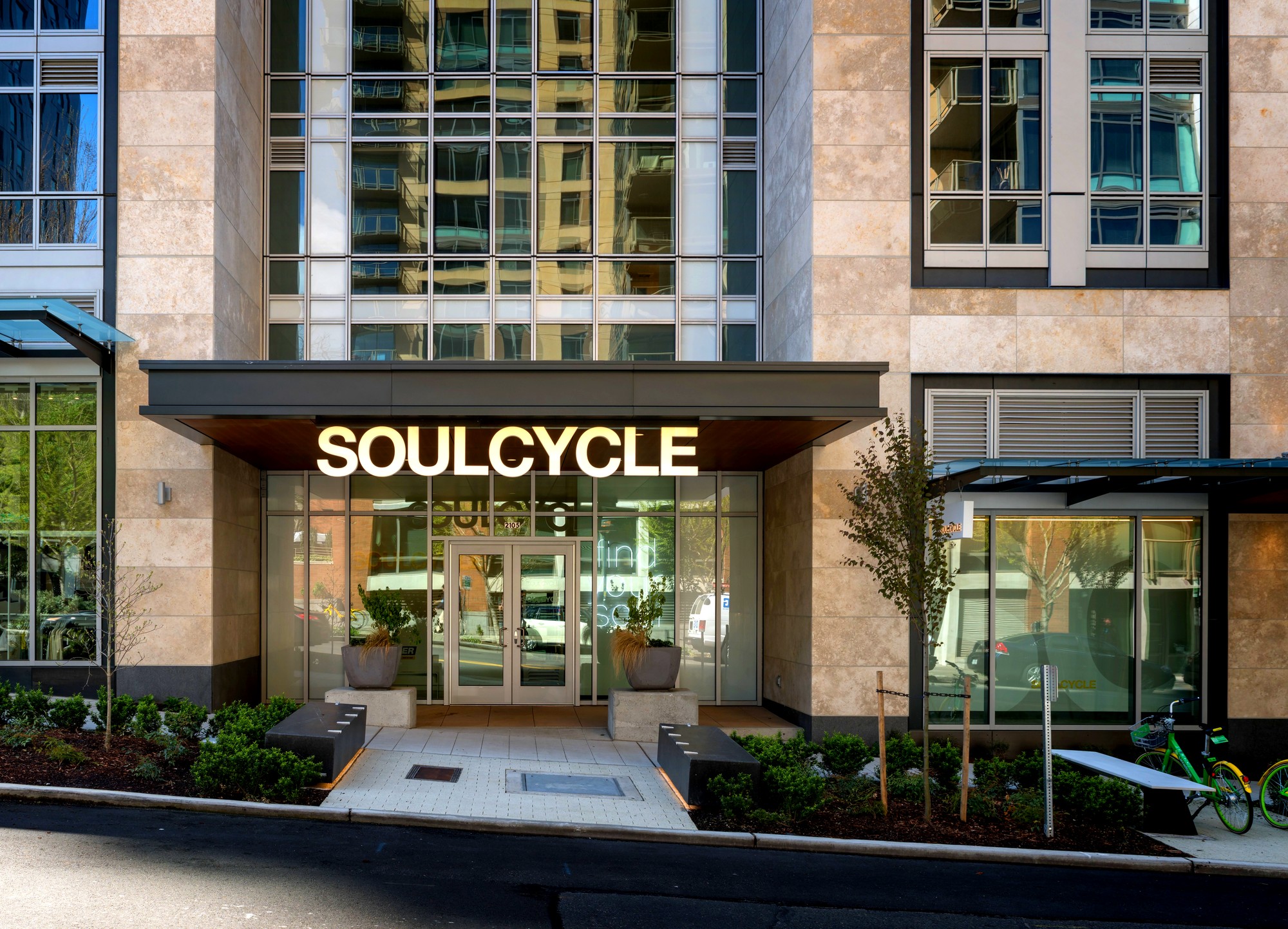
SoulCycle started in 2006 in the rear lobby of an old dance studio on Manhattan's Upper West Side, a space Elizabeth Cutler and Julie Rice found on Craigslist after Ruth Zukerman, who had already been teaching spin in the city for a decade, introduced the two over lunch. The first class rode on April 15, 2006, on West 72nd Street. Two decades later, the format has spread far enough that it now fills a glass-fronted retail space inside a South Lake Union residential tower at 2105 9th Ave, on the edge of Denny Triangle, running the same candlelit, music-driven ride the company built its name on. The Seattle studio keeps the brand's formula intact: dim rooms, a stacked platform up front, and class themes that turn a workout into an event. Fuego Friday runs a Latin-music ride. Taylor Swift + Friends builds an entire class around one artist's catalog. SoulSurvivor rounds out a schedule led by a roster of local instructors, Kolten, Stephanie P., Jess L., Victoria H., Evan, Earl, and Jenna among them, each bringing a different music sensibility to the same forty-five minutes on a bike.
From a Craigslist Lobby to a National Format
The founding story matters here because SoulCycle's whole pitch rests on it: three women who couldn't find the level of energy and community they wanted in New York's cycling studios built one themselves, starting small enough that the first location was borrowed space in someone else's dance studio. That scrappy origin is easy to forget standing inside a studio built into a modern glass tower, but the format itself hasn't drifted far from the original idea, a coach-led ride set to music, in the dark, meant to feel more like a shared experience than a workout class. Cutler and Rice were both mothers who had relocated to Manhattan, one from Los Angeles and one from Boulder, and neither had a fitness-industry background before SoulCycle. That outsider's perspective shaped the format as much as Zukerman's decade of spin-teaching experience did, favoring atmosphere and music over the technical drills a longtime instructor might have defaulted to.
The Studio on 9th Avenue
Seattle's location sits at 2105 9th Ave, inside a residential high-rise near the Denny Triangle and South Lake Union border, close enough to both neighborhoods that listings split on which one to credit. The studio's own entrance carries the brand's signature look: a lit yellow SOULCYCLE wordmark on a white wall, a single bike parked near reception, and a retail wall stocked with branded apparel, from graphic tees to a Nike collaboration tank. It reads less like a gym lobby and more like a small boutique that happens to have bikes in the back rooms. The building itself sits among the newer glass residential towers that have reshaped this stretch of 9th Avenue over the past decade, part of the broader wave of development that turned Denny Triangle from a mostly industrial gap between downtown and South Lake Union into one more dense residential corridor.
Not Just Spin: Themed Rides
What separates SoulCycle from a standard indoor cycling class is how much of the schedule gets built around a specific mood rather than a generic difficulty level. Fuego Friday leans into Latin music for a faster, hip-driven ride. Taylor Swift + Friends turns a pop catalog into forty-five minutes of choreography-adjacent cycling, the kind of themed class that shows up on social media as often as it shows up on the studio calendar. SoulSurvivor closes out the week with a format built around endurance rather than a single artist's songbook. Instructors rotate through all three, which means the same class name can feel different depending on who's teaching it that day, a deliberate feature of the format rather than an inconsistency.
What a Ride Costs
SoulCycle's pricing runs on a national structure that generally holds across markets: a single drop-in class runs somewhere between $25 and $42 depending on demand and time slot, a five-class pack lands around $175 to $195, and monthly membership plans range from roughly $134 to $481 depending on how many classes are included and whether the plan auto-renews. None of those figures are Seattle-specific promises, since SoulCycle prices shift by studio and season, but they give a realistic range for what a South Lake Union rider should expect to pay before ever checking the app.
Nineteen Years In, Still the Same Bet
What's actually notable about the Seattle studio isn't that it exists, indoor cycling studios are common enough in a city this size, it's that the format hasn't needed to change much to keep filling a room nineteen years after two moms and a longtime spin instructor decided New York needed something better than what was already out there. The lobby swapped a rented dance studio for a glass tower on 9th Avenue, and the retail wall has grown from nothing into a full apparel line, but the bet underneath all of it, that people will pay for a ride built around music and community rather than just cardio, is exactly the one Cutler, Rice, and Zukerman placed in 2006.