top of page
< Back

Picklewood: Seattle's SoDo Pickleball Country Club

Ethan Stowell and Nathan Talbot opened Picklewood, an 11-court pickleball club and restaurant in Seattle's SoDo neighborhood, on November 21, 2025.
<h2>A Father&#x27;s Search for a Friday Night</h2>
<p>Nathan Talbot spent years running out of places to take his kids on a Friday night in Seattle. He has three boys, all under 12. By his own account, there was almost nothing in the city built for a parent and a kid to do together after dinner. Talbot is a 2002 graduate of Seattle&#x27;s Lakeside School, where he played three sports, and he spent his career as an investment banker, at Goldman Sachs, at several middle-market companies and at Bank of Montreal, before deciding to build something of his own. In 2020, Seattle restaurateur Ethan Stowell filed plans for a restaurant inside the SoDo UrbanWorks complex on 1st Avenue South. By the spring of 2024, that filing had grown into something neither man had built before: a pickleball club with a full kitchen attached. Talbot became the founder and chief executive of Picklewood. Stowell put his kitchen behind it. The doors opened to the public on November 21, 2025.</p>
<h2>From a Liquor Warehouse to Eleven Courts</h2>
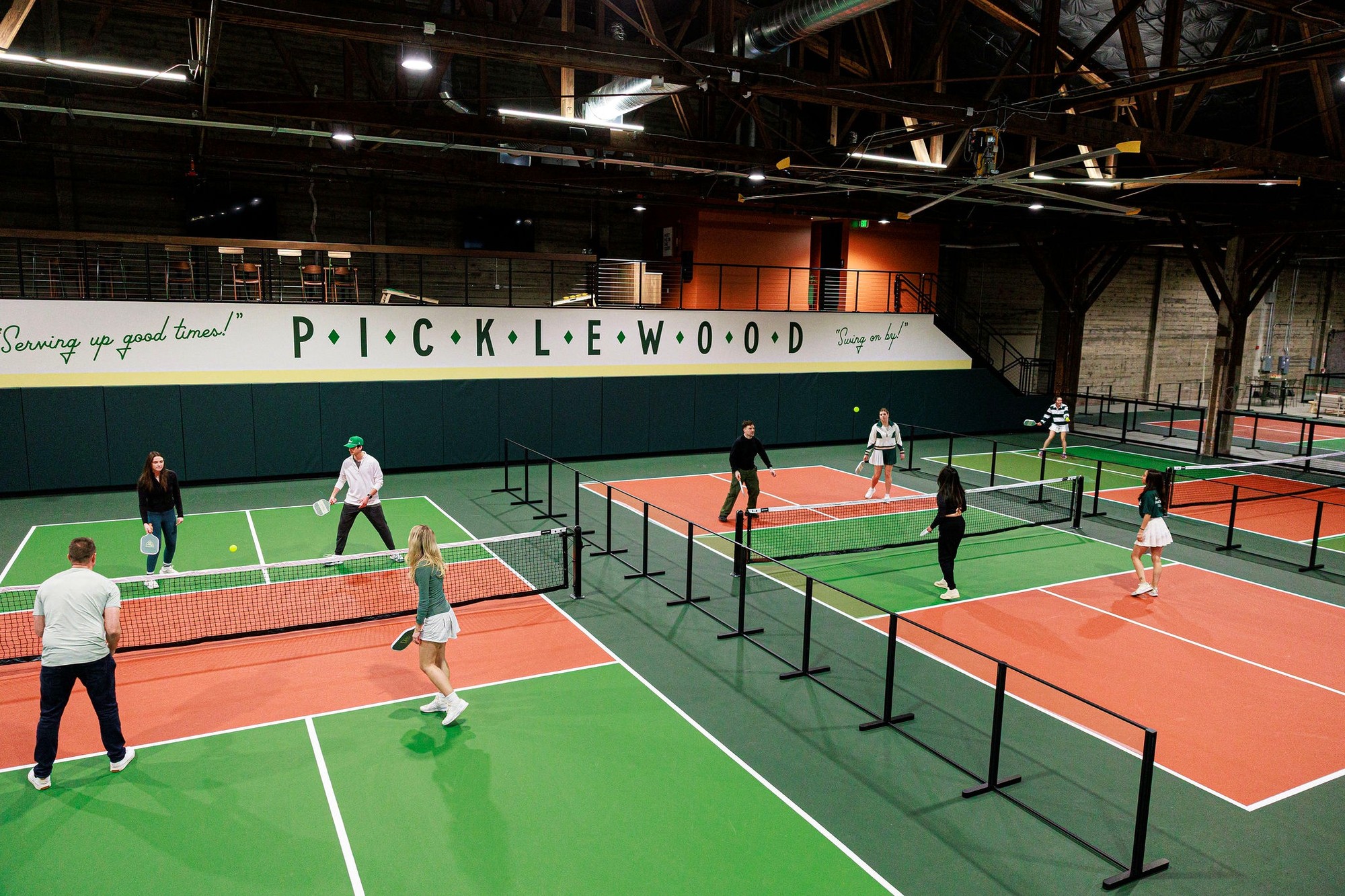
<p>Seattle Met has reported that the space Picklewood now occupies at 4121 1st Ave S last held liquor, not paddles, inside SoDo UrbanWorks, a decade-long conversion of old warehouse space along 1st Avenue South that already counts Southern Glazer&#x27;s Wine and Spirits, a major liquor distributor, as a tenant a few doors down. October 2024&#x27;s permit called for eight courts. What opened thirteen months later was bigger. Seven indoor courts, four outdoor, eleven total, inside roughly 25,000 square feet. Talbot has said permitting with the City of Seattle and finding the right real estate were the hardest parts of the build, harder than building the courts themselves. Seattle Met has also reported that more than $600,000 went into insulation alone, and that the ceiling over the courts was engineered specifically so a white ball would not disappear against it mid-rally. A general contractor, Foushee, built it for the building&#x27;s owner, Nicola Wealth, and a creative studio called People People designed the look: pickleball meeting a campy, retro country club, right down to channel letters more than eleven feet tall glowing over the roof.</p>
<h2>Ethan Stowell&#x27;s Courtside Restaurant Bet</h2>
<p>Ethan Stowell built his name on more than a dozen Seattle restaurants under the Ethan Stowell Restaurants banner, among them Goldfinch Tavern, How to Cook a Wolf and Rione XIII, before stepping back from day to day operations there in 2025. He kept his shares. He kept his board seat at the company he founded. This year, though, he has spent his time opening two restaurants on his own instead: a downtown steakhouse called Cut Club and a Kirkland spot called Lime Social, alongside a new consulting venture, Good Table Hospitality. Asked about the state of the restaurant business at Picklewood&#x27;s opening, Stowell called it a source of cautious optimism, pointing to more foot traffic downtown than the industry headlines suggested. It is a modest claim. But it comes from a restaurateur, and it fits a year in which he has been choosing his own rooms again.</p>
<h2>A Country Club That Charges No Dues</h2>
<p>Talbot has described Picklewood&#x27;s look as a straight, self-aware nod to a 1970s country club, the kind of set that could pass for Bushwood from Caddyshack, built with a pro shop, a merchandise corner, an outdoor beer garden and courtside dining lounges where a table can watch a match instead of just eating dinner. Seattle Met reports each of the eleven courts can hold up to a dozen people at once. The difference from Bushwood is the door. Nobody needs a membership here. It is open to the public: open play, a beginner class called Pickleball 101, private court rentals, organized leagues, the way a real country club has never been. That inversion, a members-only aesthetic sold with no membership requirement, is the whole joke and the whole pitch at once, and it is why a father looking for a Friday night activity can walk into Picklewood&#x27;s SoDo storefront on 1st Avenue South without an invitation or a sponsor.</p>
<h2>SoDo&#x27;s Club Versus Rainier Valley&#x27;s Arena</h2>
<p>In a former Pepsi bottling plant in Rainier Valley, a different bet on the same sport opened two months earlier. Side Out Tsunami built out roughly 26 indoor courts across nearly 100,000 square feet, working with the Seattle Tsunami&#x27;s team to chase tournament play under the PPA and USA Pickleball banners. Picklewood makes no such claim. It never tried to. Its eleven courts, less than half the size of Side Out&#x27;s footprint, are built around a kitchen, a beer garden and a country club bit rather than a bracket. Seattle got both versions of the same sport inside the same season, one built for a ranked ladder and one built for a father who just wants somewhere to take his kids after dinner, and the two are a world apart.</p>
<h2>What Picklewood&#x27;s First Season Actually Showed</h2>
<p>By Talbot&#x27;s own count, the ticketed grand opening party on December 5, 2025, drew almost 400 people into the building. In his words, the room was rocking. That figure comes from the founder himself and has not been independently verified elsewhere. What outside coverage did confirm, twelve days later, was more measured. The Infatuation reviewed the sliders, chicken strips and fries in December and found the food serviceable rather than memorable. It declined to give a full rating, because in its assessment, the courts and the retro room are the actual draw and the kitchen is secondary to them. That is a narrower verdict than a country club selling itself on Caddyshack nostalgia might want, but it matches what Talbot himself has said he built: a place to watch a rally and eat a slider, in that order, on a Friday night that finally has somewhere to go.</p>

A Father's Search for a Friday Night

Nathan Talbot spent years running out of places to take his kids on a Friday night in Seattle. He has three boys, all under 12. By his own account, there was almost nothing in the city built for a parent and a kid to do together after dinner. Talbot is a 2002 graduate of Seattle's Lakeside School, where he played three sports, and he spent his career as an investment banker, at Goldman Sachs, at several middle-market companies and at Bank of Montreal, before deciding to build something of his own. In 2020, Seattle restaurateur Ethan Stowell filed plans for a restaurant inside the SoDo UrbanWorks complex on 1st Avenue South. By the spring of 2024, that filing had grown into something neither man had built before: a pickleball club with a full kitchen attached. Talbot became the founder and chief executive of Picklewood. Stowell put his kitchen behind it. The doors opened to the public on November 21, 2025.

From a Liquor Warehouse to Eleven Courts

Seattle Met has reported that the space Picklewood now occupies at 4121 1st Ave S last held liquor, not paddles, inside SoDo UrbanWorks, a decade-long conversion of old warehouse space along 1st Avenue South that already counts Southern Glazer's Wine and Spirits, a major liquor distributor, as a tenant a few doors down. October 2024's permit called for eight courts. What opened thirteen months later was bigger. Seven indoor courts, four outdoor, eleven total, inside roughly 25,000 square feet. Talbot has said permitting with the City of Seattle and finding the right real estate were the hardest parts of the build, harder than building the courts themselves. Seattle Met has also reported that more than $600,000 went into insulation alone, and that the ceiling over the courts was engineered specifically so a white ball would not disappear against it mid-rally. A general contractor, Foushee, built it for the building's owner, Nicola Wealth, and a creative studio called People People designed the look: pickleball meeting a campy, retro country club, right down to channel letters more than eleven feet tall glowing over the roof.

Ethan Stowell's Courtside Restaurant Bet

Ethan Stowell built his name on more than a dozen Seattle restaurants under the Ethan Stowell Restaurants banner, among them Goldfinch Tavern, How to Cook a Wolf and Rione XIII, before stepping back from day to day operations there in 2025. He kept his shares. He kept his board seat at the company he founded. This year, though, he has spent his time opening two restaurants on his own instead: a downtown steakhouse called Cut Club and a Kirkland spot called Lime Social, alongside a new consulting venture, Good Table Hospitality. Asked about the state of the restaurant business at Picklewood's opening, Stowell called it a source of cautious optimism, pointing to more foot traffic downtown than the industry headlines suggested. It is a modest claim. But it comes from a restaurateur, and it fits a year in which he has been choosing his own rooms again.

A Country Club That Charges No Dues

Talbot has described Picklewood's look as a straight, self-aware nod to a 1970s country club, the kind of set that could pass for Bushwood from Caddyshack, built with a pro shop, a merchandise corner, an outdoor beer garden and courtside dining lounges where a table can watch a match instead of just eating dinner. Seattle Met reports each of the eleven courts can hold up to a dozen people at once. The difference from Bushwood is the door. Nobody needs a membership here. It is open to the public: open play, a beginner class called Pickleball 101, private court rentals, organized leagues, the way a real country club has never been. That inversion, a members-only aesthetic sold with no membership requirement, is the whole joke and the whole pitch at once, and it is why a father looking for a Friday night activity can walk into Picklewood's SoDo storefront on 1st Avenue South without an invitation or a sponsor.

SoDo's Club Versus Rainier Valley's Arena

In a former Pepsi bottling plant in Rainier Valley, a different bet on the same sport opened two months earlier. Side Out Tsunami built out roughly 26 indoor courts across nearly 100,000 square feet, working with the Seattle Tsunami's team to chase tournament play under the PPA and USA Pickleball banners. Picklewood makes no such claim. It never tried to. Its eleven courts, less than half the size of Side Out's footprint, are built around a kitchen, a beer garden and a country club bit rather than a bracket. Seattle got both versions of the same sport inside the same season, one built for a ranked ladder and one built for a father who just wants somewhere to take his kids after dinner, and the two are a world apart.

What Picklewood's First Season Actually Showed

By Talbot's own count, the ticketed grand opening party on December 5, 2025, drew almost 400 people into the building. In his words, the room was rocking. That figure comes from the founder himself and has not been independently verified elsewhere. What outside coverage did confirm, twelve days later, was more measured. The Infatuation reviewed the sliders, chicken strips and fries in December and found the food serviceable rather than memorable. It declined to give a full rating, because in its assessment, the courts and the retro room are the actual draw and the kitchen is secondary to them. That is a narrower verdict than a country club selling itself on Caddyshack nostalgia might want, but it matches what Talbot himself has said he built: a place to watch a rally and eat a slider, in that order, on a Friday night that finally has somewhere to go.

bottom of page