Fremont's Old Chocolate Factory Just Became Ten Pickleball Courts
Theo Chocolate's old roastery sat empty until The Picklr filled it with ten courts this spring. Real facts on the build-out, the opening, and what a fast-growing pickleball franchise costs to join in Fremont.
From Roasting Cacao to Ten Indoor Courts
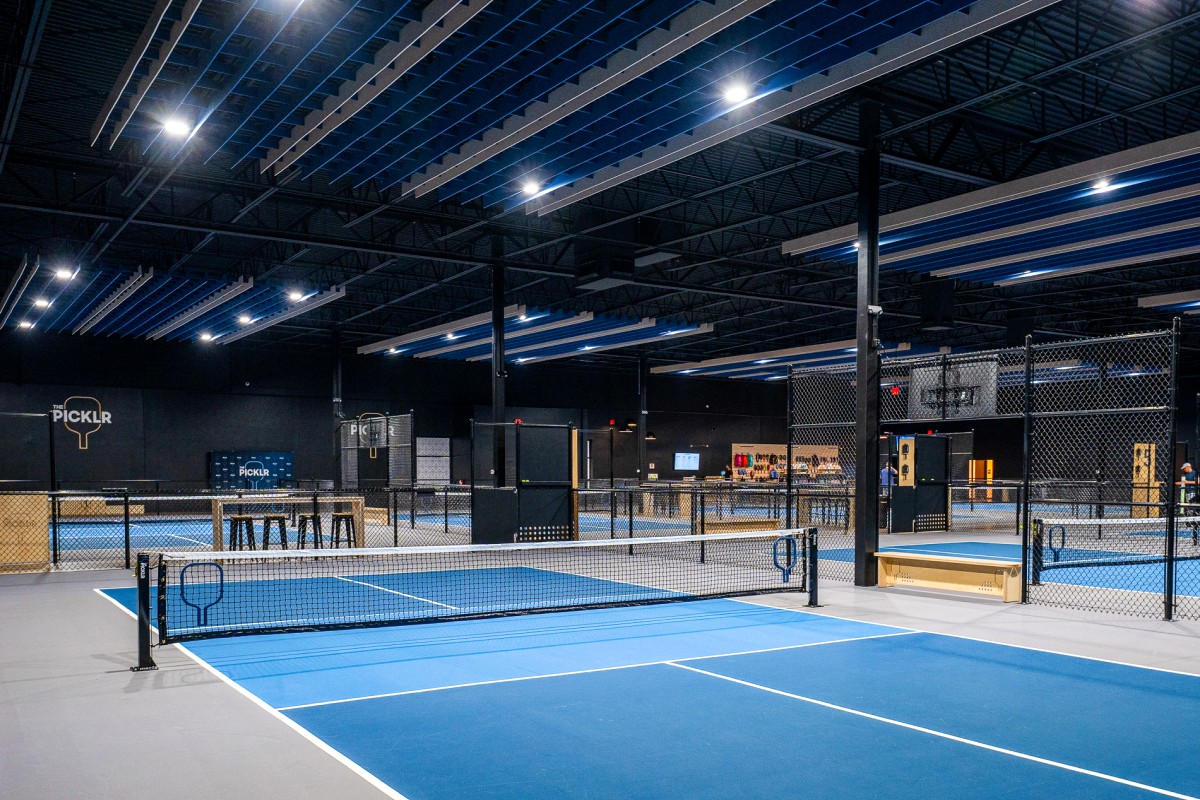
Walk into 124 North 35th Street in Fremont today and the smell of roasting cacao is gone, replaced by the pop of paddles on plastic balls across ten indoor courts. The brick building spent years as Theo Chocolate's organic, fair-trade roastery before the company moved on and left a 27,000-square-foot shell looking for a second life. In April 2026, The Picklr found one. Rajiv Khatri, the club's owner, described the opening as a turning point for the surrounding blocks, and framed the club less as a gym than as Fremont's third space, somewhere to be that isn't work or home. Ten courts inside a former candy factory is an unusual way to make that argument, and Fremont seems to be buying it anyway. Pickleball has spent the last few years turning into the fastest-growing sport in the country by most counts, driven by a low barrier to entry, a court a third the size of a tennis court, and a rally that rewards patience over power. Seattle's version of that boom just landed in one of its most recognizable buildings, a former factory that already had the scale and the industrial character the sport's biggest new clubs tend to look for.
The Building's Other Life
Theo Chocolate operated its roastery out of the Fremont building for years, the Organic and Fair-Trade Roaster signage still legible on the brick above the windows even as new tenants circulated through. Once the space sat empty, its 27,000 square feet made it one of the larger available footprints in a neighborhood that had mostly run out of room to build new. The Picklr's build-out kept the industrial bones, exposed structure and all, and filled the floor with regulation courts instead of roasting equipment. It is the kind of adaptive reuse Fremont has leaned on before, an old warehouse or factory finding a new purpose rather than getting torn down for something taller.
Ten Courts and a Championship Court
The finished club holds ten indoor courts, including one championship-sized court that is fully fenced for tournament play, plus outdoor-style surfacing throughout to match the feel players get on a municipal court outside. A pro shop stocks paddles and gear for anyone who shows up without their own, and a private event space rounds out the building for group bookings, corporate outings, or a birthday party that wants something more active than a bowling alley. League play, open play, and tournaments all run through the same ten courts, alongside private and semi-private lessons taught by certified trainers for players who want structured coaching rather than a pickup game.
Opening Weekend
The Picklr Fremont opened to the public on Saturday, April 4, with a grand opening that ran from 11 a.m. to 4 p.m. and offered free all-day play to anyone who walked in. The day mixed pro play sessions and instructional clinics with catered food and drinks, raffles and prizes, and, in a detail that says something about the sport's reputation for joint-friendly, all-ages appeal, on-site chiropractic services. It was as much a neighborhood open house as a ribbon cutting, built around getting as many first-time players onto the courts as possible before the club's regular schedule took over.
A National Franchise Landing in Fremont
The Picklr itself is barely five years old, founded in 2021 in Uintah, Utah, by Jorge Barragan, and it has grown fast enough since to call itself North America's fastest-growing pickleball franchise. More than 500 locations have been sold across the United States, Canada, and Japan, though only a fraction are open and running at any given point, since new clubs take time to build out after a franchise agreement gets signed. That gap between locations sold and locations open is itself a sign of how far ahead of supply the demand for indoor courts has run. Fremont marks The Picklr's third Washington location, following clubs in Federal Way and Tacoma, and its scale, ten courts and 27,000 square feet, positions it as something closer to a flagship for the region than a standard-issue franchise outpost.
What Membership Costs
Pricing runs in tiers by age and access level. A junior membership for players 5 to 17 runs $74 a month, while a standard play membership sits at $109 a month. Adult unlimited access costs $141 a month, and a family unlimited plan, covering two adults and up to four juniors, runs $308 a month. Day passes and drop-in rates exist for anyone who wants to try a court before committing to a membership tier, a lower-stakes entry point for a sport most people learn by simply showing up and hitting a few balls.
Fremont's Third Space
Whether The Picklr becomes the neighborhood hangout Khatri describes will come down to whether people actually treat it that way, showing up between matches to sit at the pro shop counter or linger after a lesson rather than leaving the moment their court time ends. The building has already made one identity switch, from a chocolate roastery with its name still cut into the brick to a pickleball club with ten courts and a waitlist for prime-time slots. Fremont has absorbed stranger transformations than that. This one just happens to come with paddles.